SMILE Team Contributes to Landmark Study on Global Sand and Gravel Resources
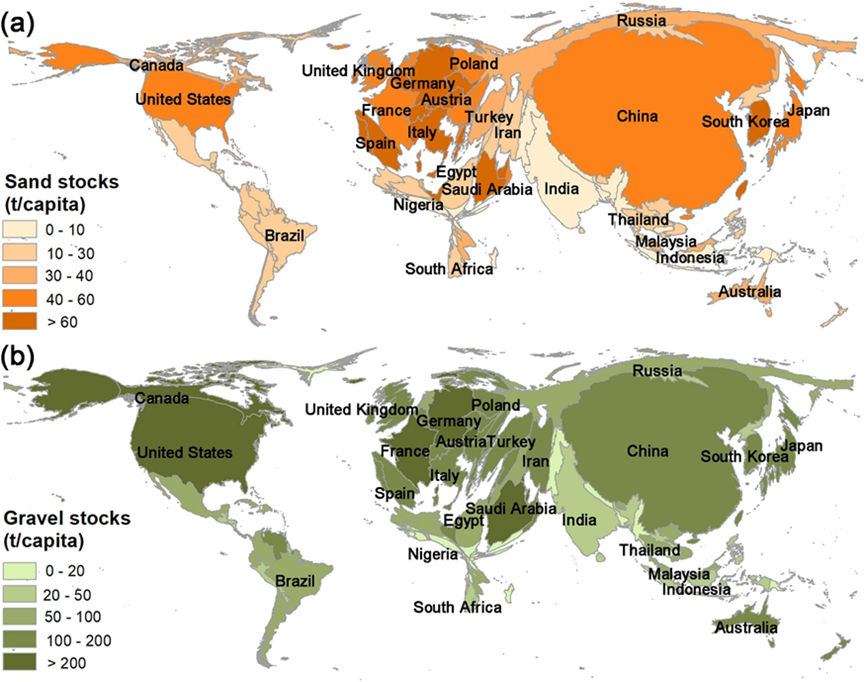
SMILE Team has co-authored a groundbreaking study that reveals critical insights into the global sand and gravel crisis. The research, published in Resources, Conservation and Recycling, tracks five decades of sand and gravel stocks and flows across 184 countries.
Key Findings
The study challenges common assumptions about construction materials, revealing that global gravel extraction is twice that of sand (22.1 billion tons versus 10.3 billion tons in 2019), yet sand dominates international trade at 1.9 times the volume of gravel. This discrepancy highlights the greater trade dependency and supply vulnerability for sand resources
Why It Matters
While sand and gravel are often studied together, this research demonstrates the importance of distinguishing between them. Sand (particles <2mm) and gravel (larger particles) serve different functions in construction, have distinct life cycle behaviors, and face different supply challenges. The study found that:
- Asia accounts for 54.6% of global sand stocks, driven by rapid urbanization
- Singapore remains the world’s largest sand importer, making it particularly vulnerable to trade disruptions
- Per capita sand consumption continues to rise globally, while gravel stocks in industrialized regions show signs of saturation
Implications for Sustainability
The findings underscore the urgent need for improved recycling technologies, policy support for artificial aggregates, and better resource management strategies. As developing regions in Africa, South America, and Southeast Asia continue urbanizing, demand for these materials will surge, intensifying the risk of resource depletion and environmental damage. The research was supported by multiple funding sources, including the Independent Research Fund Denmark (iBuildGreen project), highlighting the international collaboration essential to addressing global resource challenges.
Read the full paper
Resources, Conservation and Recycling (Impact Factor: 11.2) is a leading international journal in sustainable resource management, published by Elsevier.